The human gut microbiome has become one of the most active areas of biomedical research over the past two decades. This documentation summarizes what peer-reviewed literature has established about the microbiome, its associations with health, and the current state of scientific understanding.
What Is the Gut Microbiome?
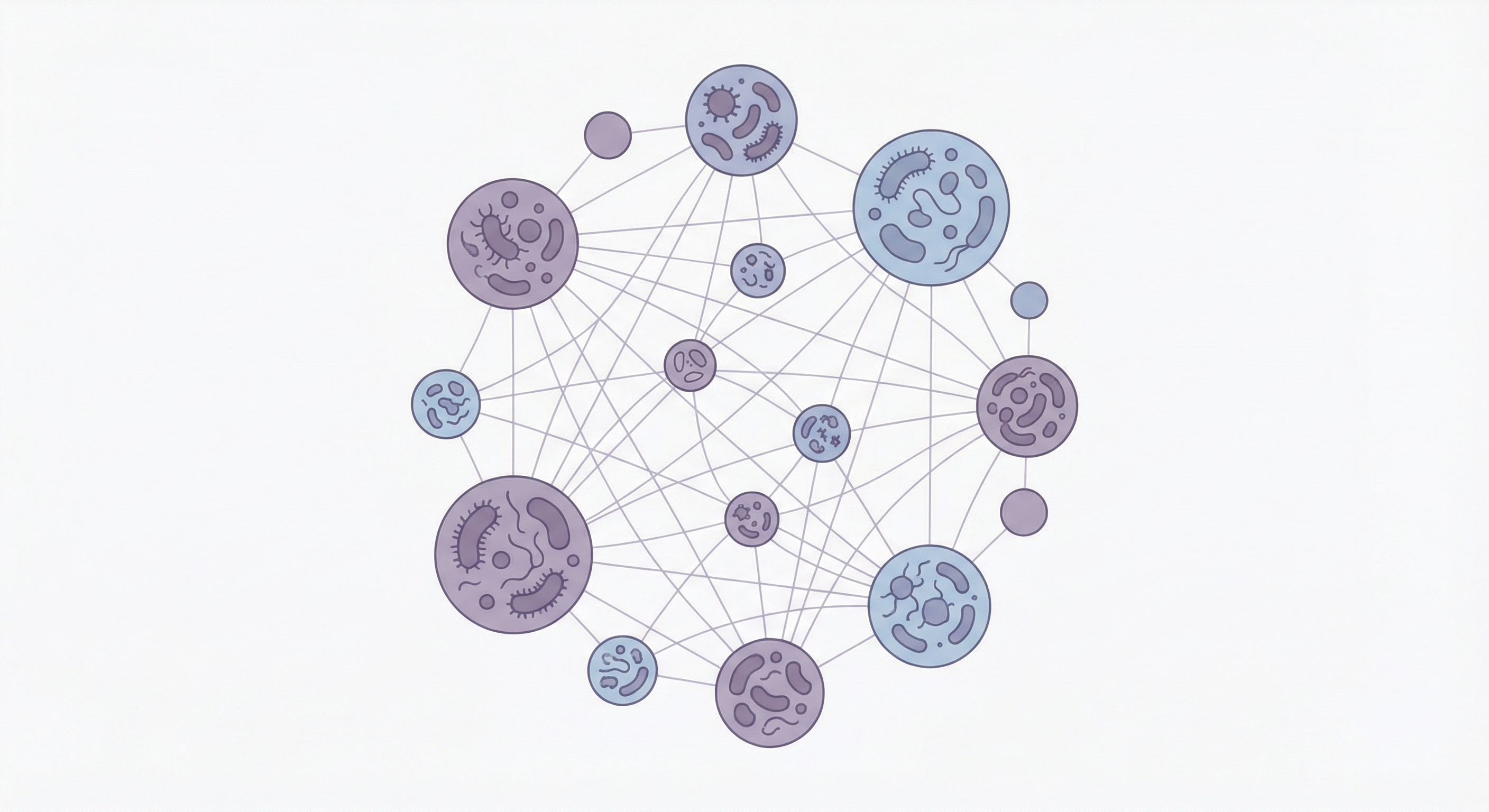
The gut microbiome refers to the trillions of microorganisms—primarily bacteria, but also viruses, fungi, and archaea—that inhabit the human gastrointestinal tract. The term "microbiota" refers to the organisms themselves, while "microbiome" technically includes both the organisms and their collective genetic material.
Key characteristics documented in research:
- The gut contains an estimated 38 trillion bacterial cells—roughly equal to the number of human cells in the body
- The collective genes of the microbiome outnumber human genes by approximately 100 to 1
- Bacterial composition varies substantially between individuals
- The dominant phyla in most healthy adults are Firmicutes and Bacteroidetes
Documented Functions
Research has documented several functions of the gut microbiome:
Metabolic Functions
- Fermentation of dietary fiber: Gut bacteria ferment indigestible carbohydrates, producing short-chain fatty acids (SCFAs) including butyrate, propionate, and acetate
- Vitamin synthesis: Certain bacteria synthesize vitamins including K, B12, and folate
- Bile acid metabolism: Gut bacteria modify bile acids, affecting lipid and glucose metabolism
Immune Function
- Immune development: Germ-free animal studies demonstrate that the microbiome is essential for normal immune system development
- Barrier function: Commensal bacteria help maintain intestinal barrier integrity
- Pathogen resistance: Resident bacteria compete with potential pathogens for nutrients and attachment sites
Factors Affecting Microbiome Composition
Research has identified numerous factors that influence microbiome composition:
- Birth mode: Vaginal versus cesarean delivery affects initial colonization patterns
- Infant feeding: Breast milk contains oligosaccharides that shape early microbiome development
- Diet: Long-term dietary patterns are strongly associated with microbiome composition
- Antibiotics: Antibiotic use can substantially alter microbiome composition, sometimes persistently
- Age: Microbiome composition changes throughout the lifespan
- Geography: Populations in different regions show distinct microbiome patterns
Associations with Disease
Observational studies have documented associations between microbiome alterations and various conditions. However, association does not establish causation—it remains unclear in most cases whether microbiome changes cause disease, result from disease, or share common underlying causes.
Conditions with documented microbiome associations include:
- Inflammatory bowel disease (Crohn's disease, ulcerative colitis)
- Irritable bowel syndrome
- Obesity and metabolic syndrome
- Type 2 diabetes
- Certain autoimmune conditions
- Colorectal cancer
The "Gut-Brain Axis"
Research has documented bidirectional communication between the gut and brain, termed the "gut-brain axis." Proposed mechanisms include:
- Vagus nerve signaling
- Microbial metabolites affecting brain function
- Immune-mediated pathways
- Enteric nervous system interactions
Animal studies have shown that microbiome manipulation can affect behavior and stress responses. Human research in this area is less established, with most studies being observational or small-scale.
Interventions: Current Evidence
Probiotics
Probiotics are live microorganisms intended to confer health benefits. Evidence quality varies considerably:
- Strongest evidence: Prevention of antibiotic-associated diarrhea, treatment of acute infectious diarrhea in children
- Moderate evidence: Some benefits in irritable bowel syndrome (strain-specific)
- Limited evidence: Most other claimed benefits lack robust clinical trial support
Effects are highly strain-specific—findings for one probiotic strain do not generalize to others.
Fecal Microbiota Transplant (FMT)
FMT involves transferring fecal material from a healthy donor to a recipient. It is FDA-approved for recurrent Clostridioides difficile infection, where it shows high efficacy. Research for other conditions is ongoing but not yet established.
Dietary Approaches
Diet is the most established modifier of microbiome composition. High-fiber diets are associated with greater microbial diversity, while Western-style diets are associated with reduced diversity. However, optimal dietary approaches for microbiome health remain undefined.
Limitations and Uncertainties
- Most human studies are observational and cannot establish causation
- What constitutes a "healthy" microbiome is not well defined
- Individual variation makes population-level recommendations challenging
- Many commercial probiotic products lack rigorous clinical evidence
- Microbiome testing for consumers has unclear clinical utility
Summary
The gut microbiome is a complex ecosystem with documented roles in metabolism, immunity, and other physiological processes. While research has identified associations between microbiome alterations and various diseases, establishing causation and developing effective interventions remains an active area of investigation. Current evidence supports certain probiotic uses and FMT for C. difficile, but many commercial claims lack robust scientific support.
References & Further Reading
- Human Microbiome Project Consortium. Structure, function and diversity of the healthy human microbiome. Nature. 2012.
- Valdes AM, et al. Role of the gut microbiota in nutrition and health. BMJ. 2018.
- NIH Common Fund. Human Microbiome Project.
- Cryan JF, et al. The Microbiota-Gut-Brain Axis. Physiol Rev. 2019.